
GFCI vs. AFCI: What’s the Difference and Why Does It Matter in Your Home?
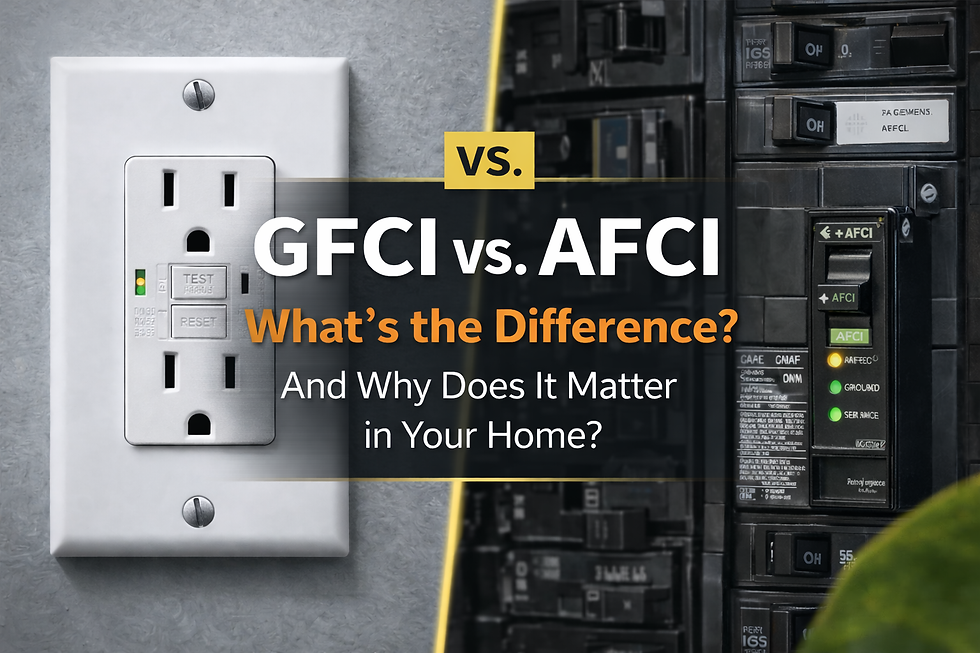
When it comes to electrical safety in your home, two important devices often come up: GFCI (Ground Fault Circuit Interrupter) and AFCI (Arc Fault Circuit Interrupter). While they may sound similar, they serve very different purposes — and both are essential for protecting your home, your appliances, and most importantly, your family.
Understanding the difference between GFCI vs. AFCI can help you make informed decisions about your home’s electrical system and ensure you’re meeting modern safety standards.
What is a GFCI?
A GFCI (Ground Fault Circuit Interrupter) is designed to protect people from electric shock.
It works by monitoring the flow of electricity in a circuit. If it detects an imbalance — meaning electricity is leaking somewhere it shouldn’t be (like through water or a person) — it will shut off power instantly.
Where are GFCIs used?
GFCIs are typically installed in areas where electricity and water may come into contact, such as:
Bathrooms
Kitchens
Laundry rooms
Outdoor outlets
Garages
You’ll often recognize a GFCI outlet by its “TEST” and “RESET” buttons.
What is an AFCI?
An AFCI (Arc Fault Circuit Interrupter) is designed to protect your home from electrical fires.
It detects dangerous electrical arcs — small sparks that can occur when wires are damaged, loose, or deteriorating. These arcs can generate heat and potentially start a fire behind walls, where you can’t see them.
When an AFCI detects this type of hazard, it shuts off the circuit before a fire can start.
Where are AFCIs used?
AFCIs are typically installed in:
Bedrooms
Living rooms
Hallways
Dining rooms
Most general living areas
They are usually located in your electrical panel as circuit breakers.
GFCI vs. AFCI: Key Differences
Understanding the difference between GFCI and AFCI is essential for home safety:
Feature | GFCI | AFCI |
Protects Against | Electric shock | Electrical fires |
Detects | Ground faults | Arc faults (sparking) |
Common Locations | Wet areas (kitchen, bathroom) | Living spaces |
Device Type | Outlet or breaker | Usually breaker |
👉 Simple way to remember:
GFCI = protects people
AFCI = protects your home
Why Both GFCI and AFCI Matter
Modern homes require both types of protection because they guard against different electrical hazards.
1. Shock Prevention
GFCIs are critical in preventing serious injury or even death caused by electrical shock — especially in wet environments.
2. Fire Prevention
AFCIs help prevent electrical fires caused by damaged wiring, aging systems, or faulty connections.
3. Code Compliance
Electrical codes have evolved to require both GFCI and AFCI protection in specific areas of the home. If your home is older, you may not have adequate protection installed.
4. Protection for Modern Electronics
Today’s homes are filled with sensitive electronics. Proper circuit protection helps reduce the risk of damage and improves overall safety.
Do You Need Both in Your Home?
Yes — in many cases, you need both.
In fact, some areas of your home may require dual protection, meaning both GFCI and AFCI are used on the same circuit.
For example:
Kitchens often require both
Laundry areas may require both
New construction homes must meet updated code requirements
If you’re unsure what your home currently has, a licensed electrician can quickly assess your system.
Signs Your Home May Need an Upgrade
If your home doesn’t have proper GFCI or AFCI protection, you may notice:
Outlets without TEST/RESET buttons in wet areas
An older electrical panel
Frequent breaker trips
Flickering lights
Burning smells or warm outlets
These can be signs that your system is outdated or unsafe.
The Bottom Line
Understanding the difference between GFCI vs. AFCI is key to protecting your home and family.
GFCIs protect you from shock
AFCIs protect your home from fire
Together, they provide a complete layer of electrical safety that every home should have.
Need Help Upgrading Your Home’s Electrical Safety?
If you’re not sure whether your home has proper GFCI or AFCI protection, we’re here to help.
Our licensed electricians can:✔ Inspect your current system✔ Recommend upgrades✔ Install GFCI and AFCI protection✔ Ensure your home meets current electrical safety standards
👉 Contact us today to schedule a safety check and protect what matters most.


Comments