
Do You Need an Electrical Panel Upgrade for an EV Charger?
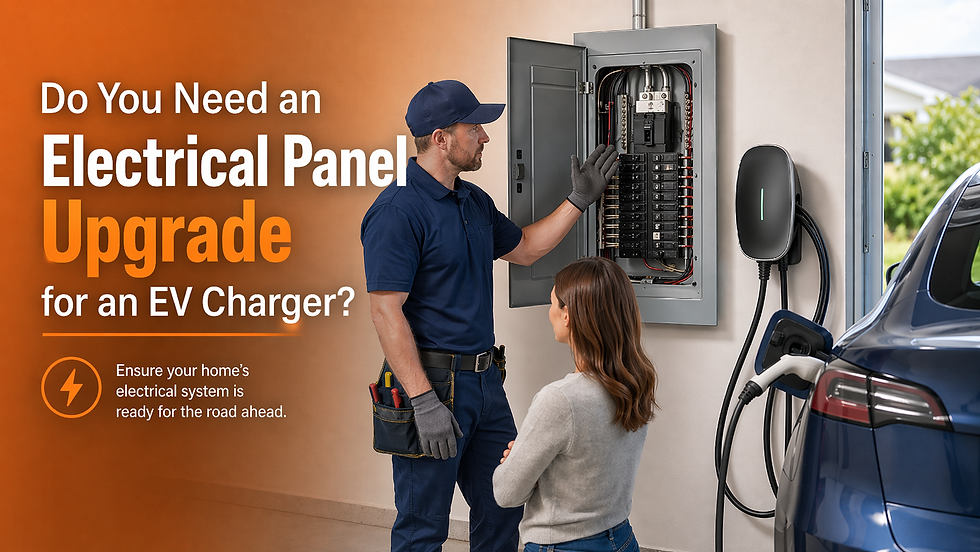
As more homeowners switch to electric vehicles, one of the most common questions electricians hear is: Do I need an electrical panel upgrade for an EV charger? The answer depends on your home’s existing electrical capacity, the size of the charger you want, and how much power your household already uses every day.
Why EV Chargers Put More Demand on Your Electrical System
A Level 2 EV charger adds a significant new electrical load to your home. Unlike many appliances that cycle on and off, EV charging can run for hours at a time. That means your electrical system must be able to handle that demand safely, especially when other major loads are running at the same time, such as your air conditioning, oven, dryer, or water heater.
This is why electricians usually begin with a load calculation. A proper load calculation looks at your home’s service size, existing circuits, major appliances, and peak electrical demand. The goal is to determine whether your current panel has enough available capacity for EV charging or whether an upgrade is recommended for safety, code compliance, and long-term reliability. Sources discussing EV charger readiness also emphasize that a load calculation by a licensed electrician is a key first step
Signs You May Need an Electrical Panel Upgrade
Not every home needs a panel upgrade for an EV charger, but there are clear warning signs that your current setup may not be enough.
1. Your home has a 60-amp or 100-amp panel
Older homes often have smaller service panels that were never designed for modern electrical demand. If your home already supports air conditioning, kitchen appliances, laundry equipment, and electronics, adding EV charging may push your system too close to its limit.
2. Your panel is full
Even if your service size is technically large enough, you may not have room for the new breaker required for an EV charger. A crowded panel is a common reason homeowners end up needing an upgrade or subpanel solution.
3. You already notice electrical issues
If lights flicker, breakers trip, or your panel runs hot, those are signs your electrical system may already be under stress. Adding an EV charger without correcting those problems can create safety risks.
4. You plan to electrify more of your home
Many homeowners installing EV chargers are also adding other high-demand equipment such as heat pumps, induction ranges, solar systems, battery storage, or new air conditioning. If that sounds like your future, upgrading the panel now can save time and money later.
5. Your panel is outdated or unsafe
Some older panels are simply not ideal candidates for added load. If your panel is aging, obsolete, or showing signs of wear, your electrician may recommend replacement even if the EV charger is the reason you called.
When You May Not Need a Panel Upgrade
The good news is that not every EV charger installation requires major electrical work. Many modern homes with 200-amp service can support EV charging without a full panel replacement, depending on the rest of the home’s electrical usage. Some homes with 100-amp service can also accommodate charging if the load calculation supports it or if a lower-amp charger is selected.
You may not need a panel upgrade if:
Your home has enough available electrical capacity
Your panel has open breaker space
You choose a charger with a lower amperage setting
You install a smart load management device
You only need slower overnight charging
That last point is important. Many homeowners assume they need the fastest possible charger, but that is not always necessary. In reality, overnight home charging often provides more than enough range for daily driving.
Alternatives to a Full Panel Upgrade
A full panel replacement is not the only option. Depending on your home, an electrician may recommend alternatives that allow you to install an EV charger without upgrading service right away.
One option is a lower-amperage Level 2 charger. Another is a load management system, which monitors electrical demand and adjusts charging to prevent overloading the panel. Industry sources increasingly point to these solutions as practical ways to avoid a full service upgrade in some homes.
In some cases, a homeowner may also start with Level 1 charging, which uses a standard outlet and charges more slowly. While not ideal for every driver, it can work well for low-mileage daily use.
The right answer depends on how quickly you need to charge, how much you drive, and what your current electrical system can safely support.
Why a Professional Evaluation Matters
Installing an EV charger is not just about convenience. It is also about safety. An overloaded electrical panel can increase the risk of nuisance tripping, overheating, damaged equipment, and costly repairs.
A licensed electrician can inspect your panel, determine your available capacity, review your breaker layout, and recommend the most cost-effective path forward. Sometimes that means a straightforward charger installation. Sometimes it means adding a subpanel, managing the load, or upgrading from 100 amps to 200 amps.
A professional evaluation also helps ensure your installation meets code requirements and manufacturer specifications. That protects both your home and your investment.
Is a Panel Upgrade Worth It?
If your home truly needs more capacity, a panel upgrade can be a smart long-term improvement. It supports EV charging, improves electrical reliability, and gives you more flexibility for future upgrades such as solar, battery backup, modern appliances, or additional air conditioning.
For many homeowners, the question is not just whether the current panel can barely handle the EV charger today. The better question is whether the home’s electrical system is ready for tomorrow.
If you are already thinking about home electrification, a panel upgrade may be one of the best improvements you can make.
Final Answer: Do You Need an Electrical Panel Upgrade for an EV Charger?
Maybe—but not always.
If your home has adequate capacity, open breaker space, and a modern electrical panel, you may be able to install an EV charger without a major upgrade. But if your panel is older, undersized, full, or already strained by household demand, a panel upgrade may be the safest and most future-ready solution.
The best place to start is with a professional electrical assessment and load calculation. That gives you a clear answer based on your actual home, your driving habits, and the charger you want to install.
If you are considering EV charger installation, make sure your electrical system is ready to support it safely, efficiently, and for years to come.
Suggested CTA:Need help determining whether your home is ready for an EV charger? Schedule an electrical assessment to find out if your current panel can handle the load or if an upgrade is recommended.


If you're finding it tricky to keep tabs on your electricity expenses, diving into the detailed analysis of your MEPCO bill can be eye-opening. A quick peek at https://mepcobillpk.app/ helped me pinpoint where my energy consumption spikes each month, which was a game-changer for budgeting smarter. Curious if others have noticed similar patterns in their billing cycles?